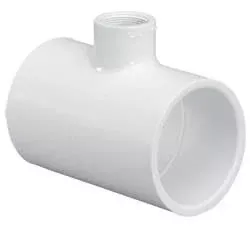
Lasco 401249 (401-249) Schedule 40 PVC Reducing Tee – 2″ Slip x 2″ Slip x 1″ Slip (Socket) – White
The Lasco 401249 (401-249) is a Schedule 40 PVC reducing tee used to branch a 1″ line off a 2″ PVC run. It features slip (socket) connections on all three ends for solvent-weld installation, making it a clean, serviceable way to build equipment pad manifolds, add return/suction branches, or plumb auxiliary lines on pool, spa, and irrigation systems.
Key Features
- Part Number: 401249 (often shown as 401-249)
- Fitting Type: Reducing Tee
- Size: 2″ x 2″ x 1″
- Ends: Slip (socket) x Slip (socket) x Slip (socket)
- Material: Schedule 40 PVC
- Color: White
- Max temperature (typical): 140°F
Common Uses
- Branching a 1″ line from a 2″ main line on pool/spa equipment pads
- Manifolds for water features, bypass loops, or auxiliary plumbing runs
- Irrigation and general water plumbing where solvent-weld PVC fittings are used
Installation Notes
- Solvent-weld sockets: Use PVC primer and PVC cement rated for pressure plumbing.
- Dry-fit first: Confirm alignment and clearance before gluing.
- Full insertion: Mark pipe insertion depth and seat pipe fully into the socket while cement is wet.
- Support the run: Add pipe supports to reduce stress that can lead to leaks or cracking over time.
- Cure time: Allow proper cure time before pressurizing (varies by cement type, temperature, and humidity).
Related Products
- Search: Lasco 401249 / 401-249
- Search: 2″ Schedule 40 PVC Tees
- Search: 2″ Schedule 40 PVC Pipe
- Search: 1″ Schedule 40 PVC Pipe
- Search: 2″ PVC Unions
- Search: PVC Primer
- Search: PVC Cement
- Search: Lasco PVC Fittings
Installation & Maintenance Tips
- Keep glue joints clean and dry during assembly; moisture and debris can weaken solvent-weld bonds.
- After curing, pressure-test the line and check for seepage around joints before backfilling or closing access.
- Avoid using PVC fittings as structural supports—pipe strain can cause hairline cracking over time.
- If you expect frequent equipment removal, add unions or a true-union valve nearby to avoid future cutting.